
You have an outdated webbrowser. The website might not work correctly.
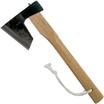
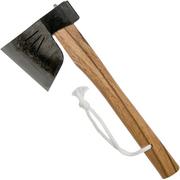
Mizuno Seisakujo axes are hand-forged in Sanjo, Japan, by Isao Mizuno and his sons. They still use the original techniques, with head shapes that vary by region and type of wood. These axes are made for precise cutting work, not blunt blows.
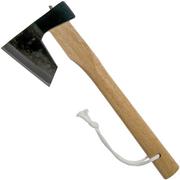

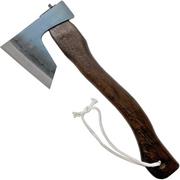

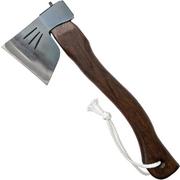

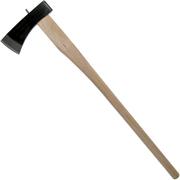

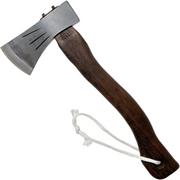

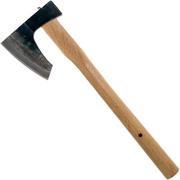

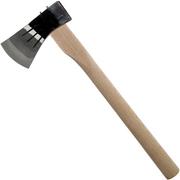

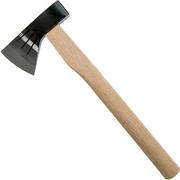

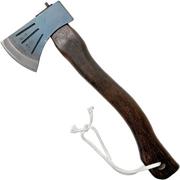


Mizuno Seisakujo forges axes in Sanjo, a city known for its smiths for centuries. Isao Mizuno and his sons make the axes by hand, and you can see it in the rough, unpolished heads.
You don't buy a Mizuno because it chops better than a Swedish axe. You buy it because it's handmade, and you can see that in every one.
The handles are made from the Japanese white oak and scorched. As a result the outside is sealed and the handle protected from the influences of the weather. The handles are ergonomically shaped and just below the handle you can find a subtle cut-out for your index finger. As a result the axe feels great in hand and is perfect for the more detailed cutting jobs.
The laminated steel axe head is comprised of 3 layers of steel (Warikomi). The middle of the edge is made from 0.45% carbon steel. The steel around it is a lot softer. As a result you have a very hard cutting edge and a softer edge to catch the blow. The head of the axe had been adorned with Japanese markings. The design refers to Kumadori of Kabuki, a very traditional type of Japanese dance. The letter underneath the mark is an ancient Japanese mark called ‘Mizuno’. On both sides of the axe head you will find stripes. They looks remarkable, but also have a specific meaning. The seven stripes represent the eight mountains, but the eighth is not mentioned as it can cause bad luck.